
Conversation Starters: K - 12
Smart Talk with Kids Ages 5-18
Written by: Susie Scanapieco
Last week, I wrote about how important it is for children to be spoken to with accurate vocabulary,
from birth through to kindergarten, prior to any formal education.
Obviously, we shouldn’t stop there. Kids of all ages love to talk to adults, if we open up the conversation.
Initiate conversations about sports, animals, politics
(yes, even the youngest children have an opinion about politics),
music, the environment or money.
Here are some of my favorite conversation starters.
You’ll be amazed at how much insight children have.
These conversations will create links to their academic learning in the classroom.
Those links or connections are necessary for brains to absorb and retain knowledge.
Smart Talk with Kids Ages 5-18
Written by: Susie Scanapieco
Last week, I wrote about how important it is for children to be spoken to with accurate vocabulary,
from birth through to kindergarten, prior to any formal education.
Obviously, we shouldn’t stop there. Kids of all ages love to talk to adults, if we open up the conversation.
Initiate conversations about sports, animals, politics
(yes, even the youngest children have an opinion about politics),
music, the environment or money.
Here are some of my favorite conversation starters.
You’ll be amazed at how much insight children have.
These conversations will create links to their academic learning in the classroom.
Those links or connections are necessary for brains to absorb and retain knowledge.

ELEMENTARY: I know you like animals, could you help me understand the different categories of [monkeys]? What special characteristics do each of them have? Do the males and females have different names? Are they prey or predators? Would they all be considered mammals? Should we research more about their specific similarities and differences? [Feel free to insert: dogs, cats, ocean creatures, mammals, reptiles.] These conversations help in math classes because children are expected to classify (ex: polygons, types of numbers); therefore, this foundational vocabulary is essential, while using a topic they are interested in.

MIDDLE SCHOOL: Did you think there should be salary caps in sports? What do you think creates revenue for players from different cities? Why should teams be limited in their spending? How do you think teams make profits? Don’t be afraid of bringing up conversations you don’t know much about yourself. Just Google them together! Teaching children that when you don’t know something it’s worth researching, is an important life lesson.

TEENAGERS: Do you know that a few years ago teenage girls in Nigeria were kidnapped just because they were going to school. In their country, some people don’t believe girls should go to school. They believe they should just get married (to old men, who have many other wives) and have babies and are expected to be housewives. Can you believe that? Not exactly mathematical; however, understanding the necessity of education is a big struggle in high school; therefore, this conversation this might lead them to appreciate their own education a bit more. (More about that in my next article.)
These conversations may span days or weeks even. Consider the knowledge they are gaining from these talks: world issues, names of people with global importance, realistic data, opinions, ideologies, content vocabulary.
These conversations may span days or weeks even. Consider the knowledge they are gaining from these talks: world issues, names of people with global importance, realistic data, opinions, ideologies, content vocabulary.
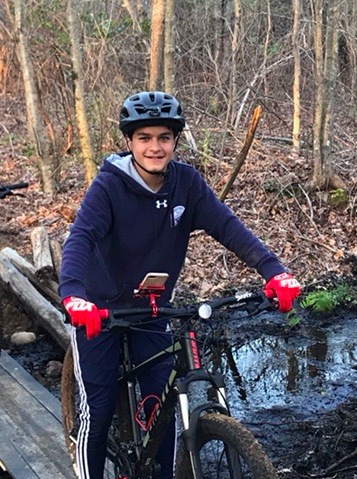
Children are at their peak of Higher Cognitive Function between the ages of 8 months and 9 years.
They are capable of learning things by memory and also by application – consider a five year-old’s ability to memorize site words and to also learn how to sound out new words.
Are we taking advantage of that as parents, educators and a society as a whole?
Are we giving credit to these children and their natural abilities?
Or are we waiting too long to challenge them with real-life concepts because we think they are too young?
After 9 years old, research shows a decrease in this brain activity.
Think about the Middle School children you know.
Most of them entered MS at around 10 years old (5th grade).
Had they been given enough background knowledge during their ‘peak’ to thrive in their new setting?
Are they aware of the world around them?
Many children fall apart in middle school; some academically, some emotionally, some socially.
We blame it on hormones, change of school and pre-teen attitudes but perhaps it’s because they are not grounded with enough foundational information and processes to tackle Middle School concepts and expectations with confidence.
Let’s remember to provide young children with these essential tools.
For those who may not have done this before middle school, help them by starting the conversations now.
It’s never too late. Their cognitive function might be slowing down but that doesn’t mean it isn’t active.
They are capable of learning things by memory and also by application – consider a five year-old’s ability to memorize site words and to also learn how to sound out new words.
Are we taking advantage of that as parents, educators and a society as a whole?
Are we giving credit to these children and their natural abilities?
Or are we waiting too long to challenge them with real-life concepts because we think they are too young?
After 9 years old, research shows a decrease in this brain activity.
Think about the Middle School children you know.
Most of them entered MS at around 10 years old (5th grade).
Had they been given enough background knowledge during their ‘peak’ to thrive in their new setting?
Are they aware of the world around them?
Many children fall apart in middle school; some academically, some emotionally, some socially.
We blame it on hormones, change of school and pre-teen attitudes but perhaps it’s because they are not grounded with enough foundational information and processes to tackle Middle School concepts and expectations with confidence.
Let’s remember to provide young children with these essential tools.
For those who may not have done this before middle school, help them by starting the conversations now.
It’s never too late. Their cognitive function might be slowing down but that doesn’t mean it isn’t active.



 RSS Feed
